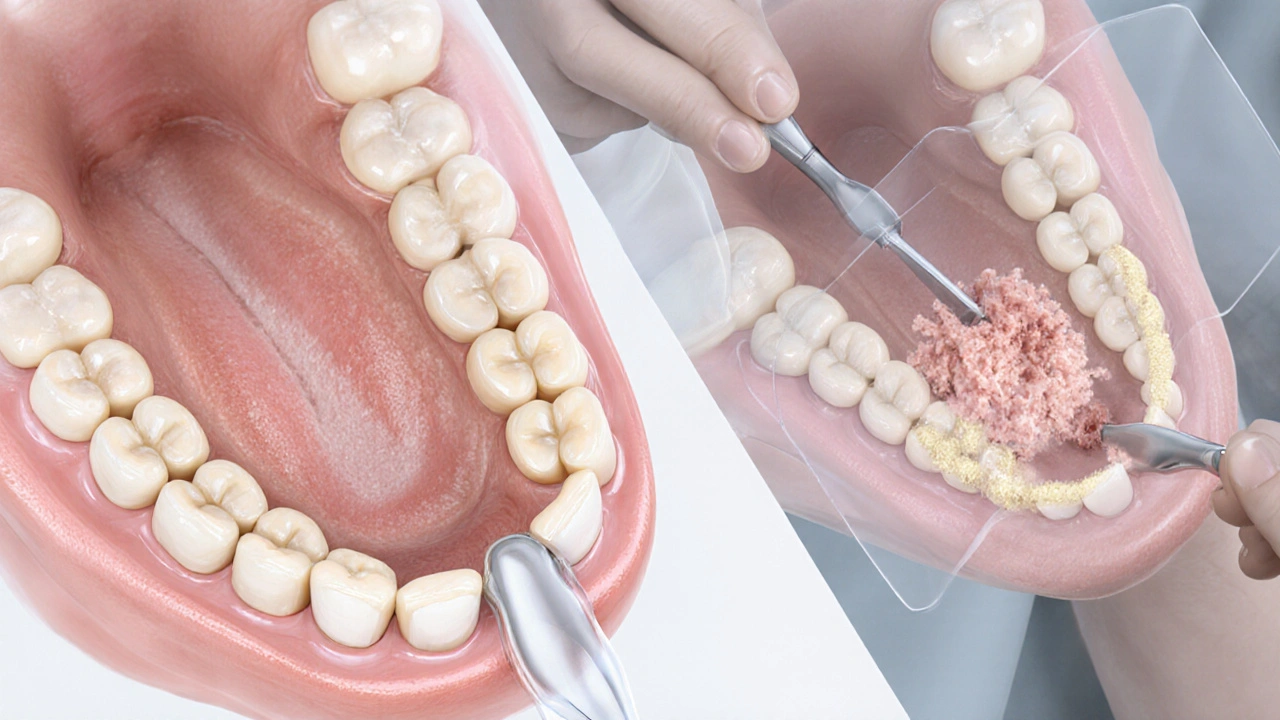
Ztráta kosti: Co to je, jak se projevuje a co s tím dělat
When you notice your tooth feels loose or your gums seem to be pulling away, it’s not just about bad breath or sensitivity — it’s often a sign of ztráta kosti, postupné zmenšování kosti v čelisti, která podporuje zuby. Also known as resorpce kosti, it’s not something that happens overnight, but it’s one of the most silent and dangerous processes in oral health. Most people don’t feel it until it’s too late — because bone doesn’t hurt. Unlike a cavity that screams when you eat sweets, bone loss creeps in quietly, often tied to parodontitida, zánět dásní a tkání kolem zubu, který ničí podporu zubu. If left untreated, it leads to kývající zub, zub, který už nemá dostatek kosti k udržení v čelisti, and eventually, tooth loss.
Many think losing a tooth is just an aesthetic problem — but it’s not. Every tooth you lose means more bone disappears. And once it’s gone, it doesn’t grow back on its own. That’s why zubní implantát, umělá kořenová struktura, která se zasazuje do čelisti a stimuluje kost k udržení objemu is often the only way to stop further bone loss after extraction. But even before that point, there’s hope. Procedures like kyretáž zubů, hluboké vyčištění pod dásní, které odstraní infekci a umožní kosti se zregenerovat can actually reverse early stages of bone loss if caught in time. It’s not magic — it’s science. And it works best when you don’t wait for pain.
You might not realize it, but your daily habits play a huge role. Brushing too hard, skipping floss, ignoring bleeding gums — all of these feed the bacteria that eat away at bone. And it’s not just about age. Even young adults can start losing bone if they have untreated gum disease. The good news? You don’t need to wait for a crisis. Regular checkups, proper cleaning tools like interdental brushes, and early intervention can save your bone — and your teeth.
In the posts below, you’ll find real, practical advice from people who’ve been there: how to spot early signs of bone loss, what treatments actually help, how to stabilize a wobbly tooth before it’s too late, and why some people get implants while others can still save their natural teeth. No fluff. Just clear steps you can take — right now — to protect what you’ve got.